Entries in the 'home ownership' Category

Rent VS. Buying a Home

Everyone seems to say that buying a home is always better than renting. Well tell that to all the people in the states hardest hit by the subprime crisis. They now know that there are risks associated with owning a home. It isn’t always a good idea to buy. I plan on giving you a few things you should think about before making the plunge into owning your new home.

Reasons to buy:

You plan on settling down and would really like someplace more permanent.

Over the long term, they tend to be good investments. The population keeps growing but land doesn’t, the price of homes with land should theoretically keep going up.

You are benefiting from your monthly payments, not your landlord. Often your payments are going to be larger when you are buying your own home, but some of that money goes to pay down the mortgage. This is money you will get back when you sell.

Reasons not to buy:

You plan on moving soon. Realtors take out huge chunks of the sale price. If you buy then sell shortly after, it is hard to get all of your money back. Even if you are in a good market, the price of the house would have to go up significantly just for you to break even.

If you don’t need a lot of space. Sharing an appartment with another person or two is often cheaper than buying your own place. If you don’t mind living with others, you could probably save more money if you shared an apartment with a few other people.

You are lazy and don’t like taking care of a yard. Either you have to do the work yourself, or you have to hire someone to mow the lawn. This costs you either time or money which I’m sure you don’t have enough of.

Things to think about before you buy:

If you are really interested in saving money, do the calculations before you buy. I would assume that the value of your home stays the same to be on the safe side. To make a like comparason of home vs rental, figure out your monthly payment for both house and rental. Make sure you include all the small things that go along with a house like maintenance, taxes and utilities.

For an amortization schedule and calculator check out this amortization calculator. Here you can see how much you actually are ‘paying down the house’. Most people are surprised to see how little of it goes to pay down the house. In the first few years of home ownership, most of your mortgage is going to pay interest to the bank. Very little of it is going to pay off your home.

Create Your Dream Home And Put Money In Your Pocket

Everyone can relate to the constant search for the home they have created in their heads. Many of us can also relate to the effort and commitment it takes to finding that dream home. If I could offer a sound piece of advice it would be that a dream home is better created than located. The most important reason for this is the instant equity that’s added to your home once it’s enhanced to your liking.

I have found that a lot of my clients are pleased at the idea of finding the home of their dreams, however once they inhabit their new home their desires become more detailed and they see things they would like changed or added. After making this observation, I continue to look for houses most suited to their needs, but also those that can be “transformed” into exactly what they want.

Increasing the equity in your home is just as important as bargaining for a good selling price. The equity in your home becomes a concern when you are afforded the protection of becoming upside down in your mortgage simply by its presence. Other bonuses in focusing on your home equity are the opportunity to use it as a down payment on an investment property or use it to pay for unforeseen expenses that may arise in an untimely manner.

Purchasing a home that can be upgraded to your liking allows for an opportunity to gain a great deal on a house, as well as, create invaluable equity in the home. By initiating improvements to the home you are not only satisfying your appetite for your dream home but you are also creating a larger gap between the current value of your home and the balance of all financial obligations pertaining to the house. This created equity can be a nest egg that offers itself to other financial endeavors and is also instant money in the bank. As tempting as it may be to purchase a ready made home, there are advantages in purchasing a home that can be molded into our very own.

It is important to make wise additions to the home. It can be said that all improvements add equity to your home, however, there are a few that are more advantageous than others. For instance, it will offer more value to your home to focus on the kitchen by upgrading the appliances or installing tile showers in the bathrooms rather than the addition of a pool or Jacuzzi. While the value of a luxury pool and Jacuzzi doesn’t offer much addition to equity the outside venture of repainting or restaining a porch or deck is beneficial. Another great equity builder would be to upgrade the bedroom closets. These ventures solidify an increase in equity, as well as, our satisfaction with our purchase.

Home equity is often overlooked as many tend to focus primarily on paying off the debt induced by purchasing their home. However, there is importance and great value in creating equity and constantly finding new ways in gaining higher equity in our homes. Home improvements are one way of making our home work for us by gaining profit. Some other ways of building additional equity in our homes would be a higher initial down payment, extra principle payments and shorter mortgage terms.

Simply put, the increasing of equity in our home is one of the easiest and most successful paths to wealth that is available. It’s almost too easy! The value of your home is rising due to your improvements. As you continue to lower your mortgage by making your payments your nest egg is growing. Almost instantly you have turned your dream home into an asset you can use for future purposeful activities that can afford you the pleasures of increasing your bank account.

Photo by: Concept to Creation

The Business of Banking

In the beginning, every financial facility had a certain group of functions they were allowed to perform. These regulations were strictly enforced not allowing them to overstep their boundaries unless they wanted to deal with stringent consequences. These laws were put into effect after the stock market crash and the Great Depression to protect banks from failures and over extension of loans. Banks were allowed to only provide the normal checking accounts, personal loans, commercial banking for businesses and other short-term loans. They were not allowed to provide any other financial services such as insurance or investments products. Alongside this regulation came the Federal Deposit Insurance Corporation, which provided protection for those depositing their money into the Banks.

After a stabilizing of the economy, there came deregulation. This lifted the previous restraint on banks and allowed them to venture into providing other financial services other than the simple checking account etc. They were not only allowed to provide investment products and insurance but they could also do business in home mortgage as well as home equity loans. This allowed Banks to become a one-stop shop for their customer’s financial needs.

Types of Banking Facilities

Not only did deregulation open up doors for Banks but it also opened up doors for other Banking Facilities to compete for the attention of financial customers. Banking Facilities such as Savings and Loans, Savings Banks and Credit Unions began to emerge. The FDIC protects some of these Banking Facilities however some are not protected.
An important point to remember is that, in advertising, anyone not protected by the FDIC are required to say so while those that are protected by the FDIC will also say so. Therefore, even though you may find a better deal at a Banking Facility that is not FDIC insured it would probably be wise to go with a facility protected by the FDIC ensuring that your money is safe.

Savings and Loans

These are often called S&L’s or Thrifts. They are known for providing a certain level of financial service for a long period of time. They are mainly in the business of collecting deposits for savings accounts or to go towards loans. Their history was in dealing mainly with the housing market. Many of them were organized as “associations”. This meant the customers who held accounts with them were owners of the Thrift or S&L. This posed a problem, as due to this type of organization the Thrift was unable to sell stock so that they could make money to grow.
During the emergence of deregulation, a lot of the Thrifts changed their organization towards corporations and also found themselves diving into commercial real estate lending. Due to Thrifts being more geared towards savings and unable to compete with the larger Banks the majority of them are located in smaller towns rather than big cities.
Also included under the umbrella of Savings and Loans are Credit Unions and Savings Banks.

Credit Unions

Credit Unions are similar to the earlier days of Thrifts. They started out as a savings club with members only being allowed to join if they met the requirements. A lot of these requirements were living in the same place, working at the same place or something else that was common amongst all of its members. Nowadays the qualifications for becoming a member have become a little more lenient and you could very well find a Credit Union that only requires you live in a certain city or county to become a member.

Credit Unions started out making personal loans to its members and then eventually graduated to auto loans. Due to their non-profit organization they were able to provide loans with lower interest rates and savings with higher rates. Another reason they are able to offer better rates is because they are not required to pay federal taxes. This gives them a big advantage over Banks and S&L’s. One other difference between Banks and Credit Unions is that The National Credit Union Administration, not the FDIC, protects the Credit Unions customers’ money up to $100,000 and governs them.

A few disadvantages of Credit Unions are that they usually don’t have multiple locations and they may be able to offer good rates on some financial products but not all of them. That’s why it is always important to shop around various Banking Facilities before you commit to a product.
Savings Banks

This type of Banking Facility has decreased in number rapidly due to its functions overlapping with those of Banks and S&L’s. Once very popular, especially on the East Coast, Savings Banks are now obsolete due to deregulation. Their initial functions saw them growing rapidly because they could function like a Commercial Bank, in that they were able to offer business loans as well as like a Thrift in that they could receive payments on these loans and savings accounts. However, once the deregulation occurred allowing Banks to do the same the services, Savings Banks were no longer needed as the customer could get all of their financial needs met at a Bank.

Which Is Better?

When it comes to choosing which type of Banking Facility is best for you, it is really about choosing the one that provides the mixture of products that best suits your needs. You may want to think about the products you need now and how this may change in the future. Another factor to consider would be location. If you feel you are settled in your area then you can focus more on personalized customer service rather than presence. However, if you feel you will be moving, or you tend to travel a lot the local Credit Union may not be as convenient as a Bank with a national presence.

No matter which Banking Facility you choose just remember that you are not locked in to purchasing products from that institution alone. You are always free to shop around for deals that will work to your benefit.

How Much Home Can You Afford To Buy?

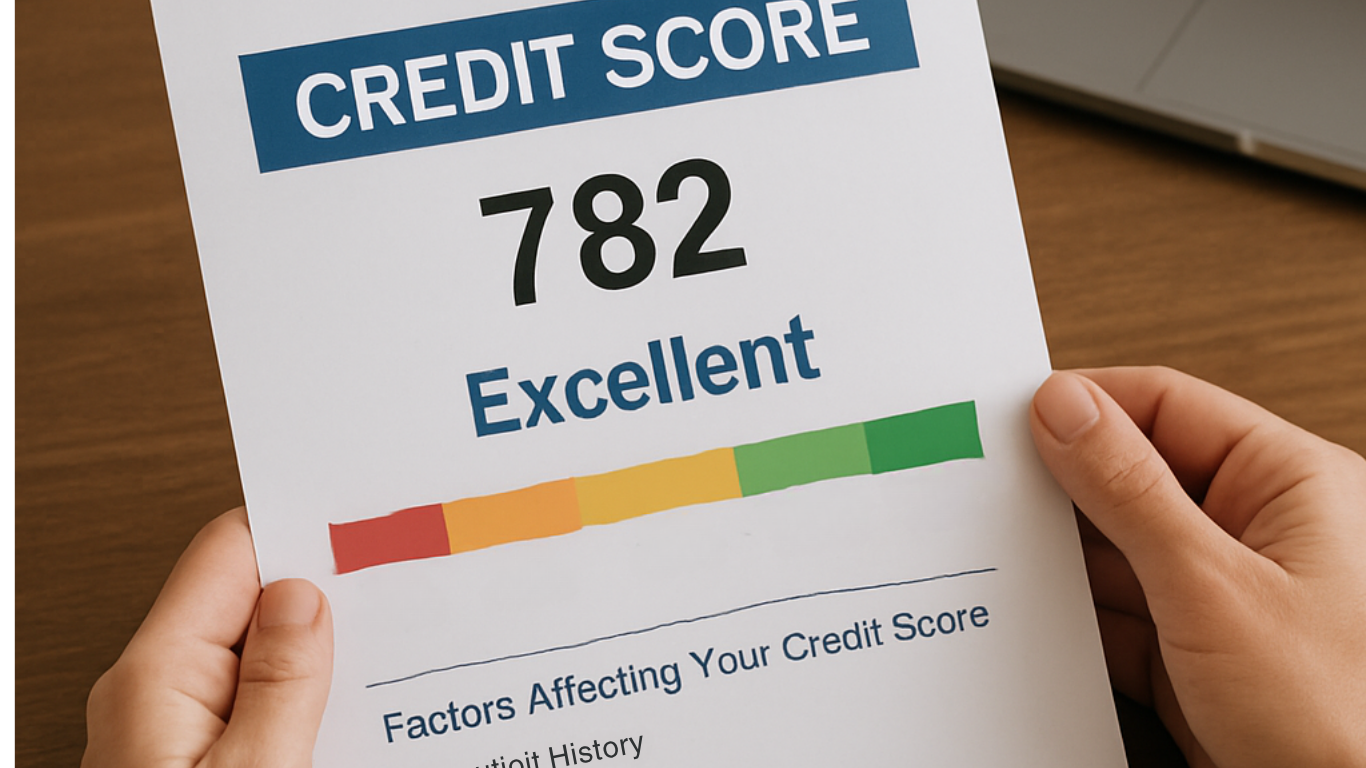
Now that you are working on improving your credit or keeping it in good standing, and you’ve figured out all of the determining factors that will lead you to financially responsible home ownership it’s time to decide on a purchase price that provides a monthly mortgage payment you are comfortable with and will allow for continued financial stability. Remember, the exciting part is finding a home we truly love and investing in it, but the important part is making sure we will be able to sustain our investment without putting a strain on our finances.

When you start the process of purchasing a home, before you ever go out to look at any homes, you should first choose a lender, often times your real estate agent will have a relationship with a trusted lender they can refer you to, and get preapproved for a loan. There are many factors that go into determining this amount, such as interest rates, the amount of your current debt, your credit rating, of course, and your income. It is recommended that you take into consideration this amount, but do note that if the amount of loan you are preapproved for seems too high, you do not have to borrow the full amount. The figure the lender provides you is the MAXIMUM amount you are qualified for this is not the amount you are required to spend.

There are many experts who say to pay anywhere from two and a half to three times your annual salary for a home, but it is smarter to look at the amount of mortgage you can get for the monthly payment you feel most comfortable with. Even though you know the total amount you qualify for that amount may call for a higher monthly payment than you were expecting. So always be sure to ask the lender to break the amount you qualify for into monthly payments.

If you feel uncomfortable in determining the affordability of a monthly mortgage payment on your own, you can always ask your lender to explain to you how much you can afford and why they chose that amount. Don’t just let someone tell you how much you can afford. Ask for an explanation. It is imperative for you to have full control of your finances and if you feel a little uncertain, your lenders are usually willing to explain to you all the details of a mortgage.

Photo by: Mike Boon