Entries in the '' Category

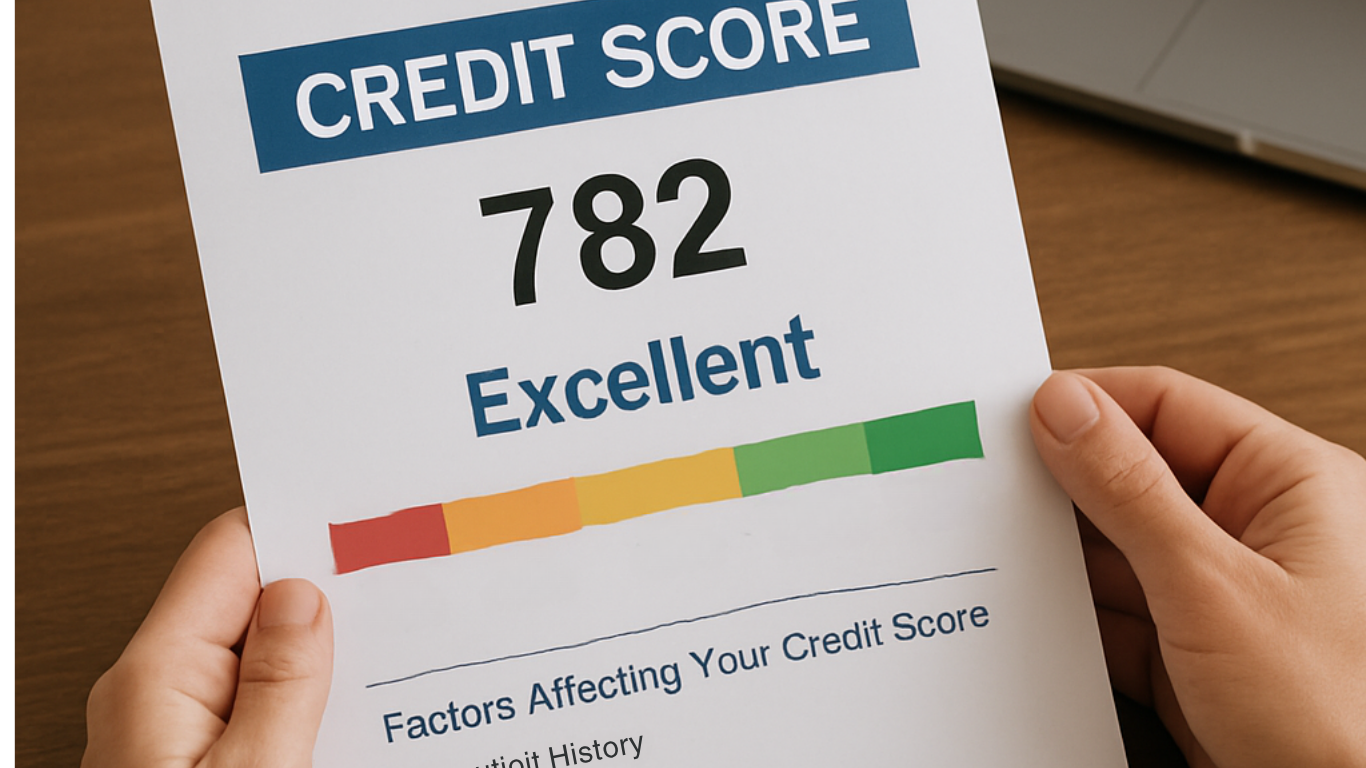
Clean Up Your Credit Score (Part 1)

Some may be wondering what exactly is a “credit score”. A credit score is a number used to analyze your creditworthiness. It is sometimes referred to as your FICO score, a name derived from the Fair Isaac Corporation, a California based company that developed the credit scoring system. The scoring system involves taking a detailed look at your credit files. These credit files are gathered by credit bureaus and are made available to a potential lender once you have granted them your permission. The score is calculated by utilizing a formula which is highly dependant on the amount of existing debt, timely payments and length of history you have with existing lenders, just to name a few. It was designed to give potential lenders a quick look at any risk that would be involved in extending credit to a particular person.

Your credit score could range from the 300’s to roughly 900. The higher your credit score, the better. The average credit score is between 600 and 700.

With the majority of lenders, your credit score is a representation of your risk factor. And with many it’s just a matter of how much risk they are willing to take. Some lenders may weigh their decisions more on how you performed with loans that are similar to theirs while others may look at your entire credit history. For example, a mortgage lender may look at your overall credit history while the timeliness of your existing payments with other credit card lenders may be more important to potential credit card issuers.

Regardless of the type of loan you are or will be looking for it is imperative you keep a clean and timely credit file. That is be sure you aren’t in more debt than you can afford and are making all of your payments by the due date. Your credit score not only affects whether you will qualify for a loan, but it also affects the interest rates of the loan and the amount of the loan as well.

What’s Used To Determine My Credit Score?
Let’s take a more detailed look at how the credit scoring system calculates your credit score. There are five major factors that are used to determine how high or low your credit score will be. I’ve listed them in order from most to least impact.

1. Payment History- late payments will weaken your credit score drastically. Lenders normally look at your past history to determine how you will perform in the future. Therefore, if you were late with existing accounts they are going to assume that you are going to be late on any line of credit they may extend to you.

2. Credit Usage- if all of your cards are maxed out or over the limit, a red flag immediately shoots up to lenders.

3. Length of History- the credit scoring system automatically assumes that any person with an extended credit history is less risky than someone without any credit history.

4. Amount of times credit was requested-Continious requests for any type of credit during a short period of time is deemed risky and will subtract points from your credit score.

5. Types of existing credit-if you only have a secured credit card you are seen as riskier than someone who makes timely payments on their installment and/or revolving loans. (An installment loan is where a person borrows a certain amount of money and makes fixed payments until the loan is paid off i.e. a car loan and a revolving loan is where you make continuous payments and every time you make a payment it gives you more money to use i.e. a credit card.)

Next time we will go over how to make your score better!

The Business of Banking

In the beginning, every financial facility had a certain group of functions they were allowed to perform. These regulations were strictly enforced not allowing them to overstep their boundaries unless they wanted to deal with stringent consequences. These laws were put into effect after the stock market crash and the Great Depression to protect banks from failures and over extension of loans. Banks were allowed to only provide the normal checking accounts, personal loans, commercial banking for businesses and other short-term loans. They were not allowed to provide any other financial services such as insurance or investments products. Alongside this regulation came the Federal Deposit Insurance Corporation, which provided protection for those depositing their money into the Banks.

After a stabilizing of the economy, there came deregulation. This lifted the previous restraint on banks and allowed them to venture into providing other financial services other than the simple checking account etc. They were not only allowed to provide investment products and insurance but they could also do business in home mortgage as well as home equity loans. This allowed Banks to become a one-stop shop for their customer’s financial needs.

Types of Banking Facilities

Not only did deregulation open up doors for Banks but it also opened up doors for other Banking Facilities to compete for the attention of financial customers. Banking Facilities such as Savings and Loans, Savings Banks and Credit Unions began to emerge. The FDIC protects some of these Banking Facilities however some are not protected.
An important point to remember is that, in advertising, anyone not protected by the FDIC are required to say so while those that are protected by the FDIC will also say so. Therefore, even though you may find a better deal at a Banking Facility that is not FDIC insured it would probably be wise to go with a facility protected by the FDIC ensuring that your money is safe.

Savings and Loans

These are often called S&L’s or Thrifts. They are known for providing a certain level of financial service for a long period of time. They are mainly in the business of collecting deposits for savings accounts or to go towards loans. Their history was in dealing mainly with the housing market. Many of them were organized as “associations”. This meant the customers who held accounts with them were owners of the Thrift or S&L. This posed a problem, as due to this type of organization the Thrift was unable to sell stock so that they could make money to grow.
During the emergence of deregulation, a lot of the Thrifts changed their organization towards corporations and also found themselves diving into commercial real estate lending. Due to Thrifts being more geared towards savings and unable to compete with the larger Banks the majority of them are located in smaller towns rather than big cities.
Also included under the umbrella of Savings and Loans are Credit Unions and Savings Banks.

Credit Unions

Credit Unions are similar to the earlier days of Thrifts. They started out as a savings club with members only being allowed to join if they met the requirements. A lot of these requirements were living in the same place, working at the same place or something else that was common amongst all of its members. Nowadays the qualifications for becoming a member have become a little more lenient and you could very well find a Credit Union that only requires you live in a certain city or county to become a member.

Credit Unions started out making personal loans to its members and then eventually graduated to auto loans. Due to their non-profit organization they were able to provide loans with lower interest rates and savings with higher rates. Another reason they are able to offer better rates is because they are not required to pay federal taxes. This gives them a big advantage over Banks and S&L’s. One other difference between Banks and Credit Unions is that The National Credit Union Administration, not the FDIC, protects the Credit Unions customers’ money up to $100,000 and governs them.

A few disadvantages of Credit Unions are that they usually don’t have multiple locations and they may be able to offer good rates on some financial products but not all of them. That’s why it is always important to shop around various Banking Facilities before you commit to a product.
Savings Banks

This type of Banking Facility has decreased in number rapidly due to its functions overlapping with those of Banks and S&L’s. Once very popular, especially on the East Coast, Savings Banks are now obsolete due to deregulation. Their initial functions saw them growing rapidly because they could function like a Commercial Bank, in that they were able to offer business loans as well as like a Thrift in that they could receive payments on these loans and savings accounts. However, once the deregulation occurred allowing Banks to do the same the services, Savings Banks were no longer needed as the customer could get all of their financial needs met at a Bank.

Which Is Better?

When it comes to choosing which type of Banking Facility is best for you, it is really about choosing the one that provides the mixture of products that best suits your needs. You may want to think about the products you need now and how this may change in the future. Another factor to consider would be location. If you feel you are settled in your area then you can focus more on personalized customer service rather than presence. However, if you feel you will be moving, or you tend to travel a lot the local Credit Union may not be as convenient as a Bank with a national presence.

No matter which Banking Facility you choose just remember that you are not locked in to purchasing products from that institution alone. You are always free to shop around for deals that will work to your benefit.

The Basics of Interest (Part Three)


Compound Interest
Compounding interest can be a great way to increase your finances in shorter time period or beyond your originally desired amount. To understand the advantages of compound interest you must understand how it can work for you or against you.  Compound interest is used in many ways by banks. It is used to calculate the interest rates on your savings account as well as the amount of interest they will charge for a loan. Of course the interest you pay on your loan is going to be higher than the interest you earn on your savings account or CD from the bank. This is the way the banks make money. They pay you a certain amount of interest on your savings that will attract you to put money into your account and then they use the money in your savings account as a loan to another customer and have them pay a higher interest rate than what you are earning therefore making a profit.

*TIP: the current interest rate on loans and the interest rate on CD usually go hand in hand. If the interest rate on a CD goes up the interest rate on loans are sure to follow*

Either way compounding interest can help you to multiply your savings. Here’s how it works. Let’s say you put $10,000 into a savings account that pays a 4 percent interest. At the end of the year you would have a total of $10,400 in your savings account. This can be figured by using:

Future Value = Present Value x (1 + interest rate)^n

Where n is the number of years you are saving it.

However, if you are dealing with compounding interest the answer gets a bit more complicated but a lot higher. Compounding interest factors in the interest rate, the amount invested, the length of the investment and the periodic payments of interest. The basis of compound interest is putting your money to work for you. With compounding not only is your money earning interest but your interest is earning interest as well. When your interest earns interest you can begin to create an abundant financial future.

Starting a savings plan with compound interest early is a good way to increasing your finances. The longer you allow compound interest to work to better it will work for you. If you were unable to start saving at a younger age it is still ok to start now. Just know that you will have to make it a point to invest large sums so that you can get a higher return.

The Basics of Interest (Part Two)

Fixed and Variable Rates

There are two types of interest rates applied to loans. It is important to know which type of interest rate is being applied to your loan. Most banks offer a variety of interest bearing accounts. Most of these accounts have fixed rates, a set rate for the life of the account. An example would be the common savings account that has a set interest rate. These are normally low rates. Another example would be a CD. These are mostly fixed rate investments. You would get a three-year CD with a 7 percent interest rate and that rate will stay the same until the three years are up.  Whatever option you choose you should understand the kind of interest rate you are getting when you open the account.

Alongside knowing the type of interest rate you getting on your investment, you should also be aware of the type of interest rate you will be paying on your loan. This information must be shared with you before you enter into the loan agreement therefore you should definitely ask your bank representative for this information before any commitment. Of course the key for banks to make money is to keep the interest rates as high as they can while still being competitive.

Credit cards, auto loans, personal loans, home equity loans, and mortgages are all usually fixed rate loans, however some credit card lenders, and home loans may have variable rates at which point you should get the details on what causes the rate to fluctuate and how much it will increase.

Lenders can be very slick when it comes to interest rates and their increase because the higher they are the more money for them. One strategy that is commonly used is the low “introductory” offer they use to get your attention. This is where they promise an outrageously low interest rate for the beginning of the loan but then astronomically rising the rate once you enter into the agreement. If you are unsure of all of the details of the loan or feel uncomfortable with the terms don’t sign anything until it has all been explained to you.

I’ll touch a little bit on compounding interest here however for more information on how compounding interest works feel free to take a look at “The Basics of Interest (Part Three)”.  Compound interest can work for you or against you. When investing it is a good thing to have an investment that compounds, adds interest on top of interest, on a regular basis. However, if you choose to use your credit card all the time and are only paying the minimum balance, you are dealing with compound interest and it is working against you. What a lot of people don’t realize is that you may have been able to purchase that product at a sale price with your credit card but the interest you will paying on that one purchase will be double and sometimes triple to the original amount you paid.

That’s why it’s important to take a careful look at the terms of your account and never charge anything on your credit card that you will not be able to pay off in full when the balance becomes due. This way you are not paying a high price later for a cheap price in the present.